
Options Observer: Harvesting Soybean options opportunities ahead of Sep WASDE
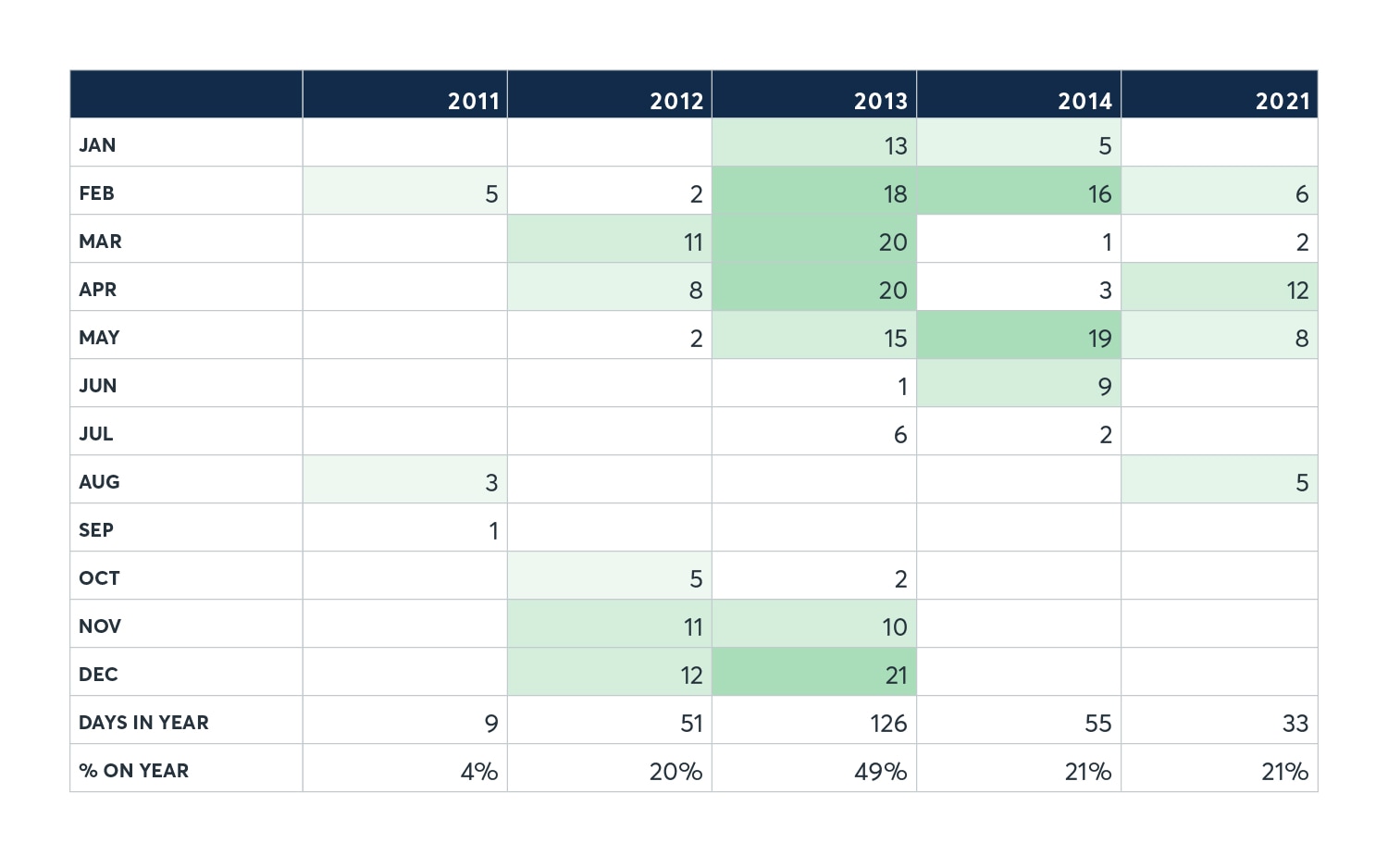
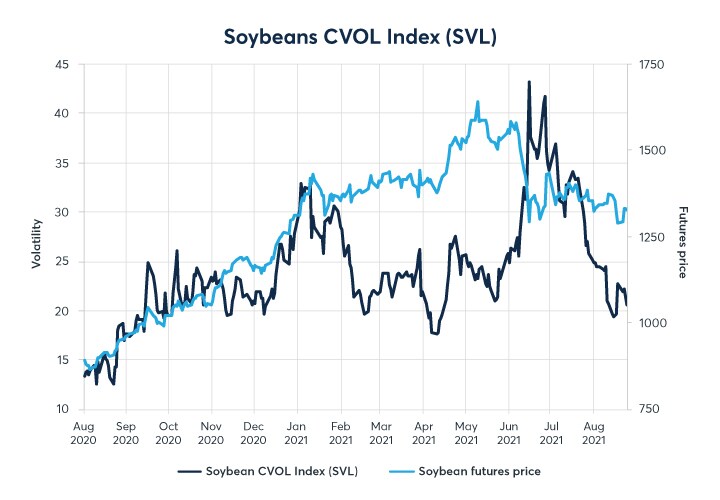
The Grain & Oilseed market has seen dramatic price action over the last 12 months given increased demand and tight balance sheets. However, things have settled down as we approach the North American harvest looking at implied volatility levels. We have seen Soybean volatility go from a high of 43% to now trading below 20%. The table below shows the occurrences when “Beans are in the teens” at the same time implied volatility is below 20%.
Source: Quikstrike
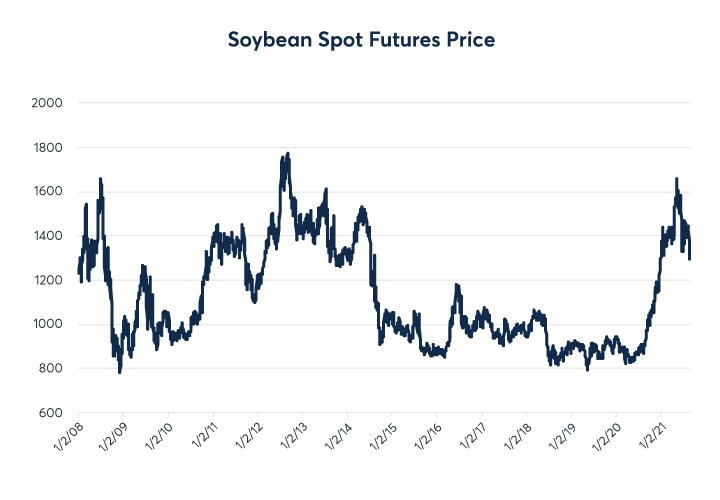
You can see that 2013 stands out in number of occurrences that implied volatility and price are both in the teens. Looking at a monthly Soybean chart over time helps give perspective.
Source: Quikstrike
Looking at a CVOL chart for Soybeans (SVL) you see the decrease in 30 day volatility, SVL fell below 20% for only the second time in 2021. Out of all Grain & Oilseed products, Soybeans currently have the lowest implied volatility.
Source: QuikStrike CVOL Dashboard
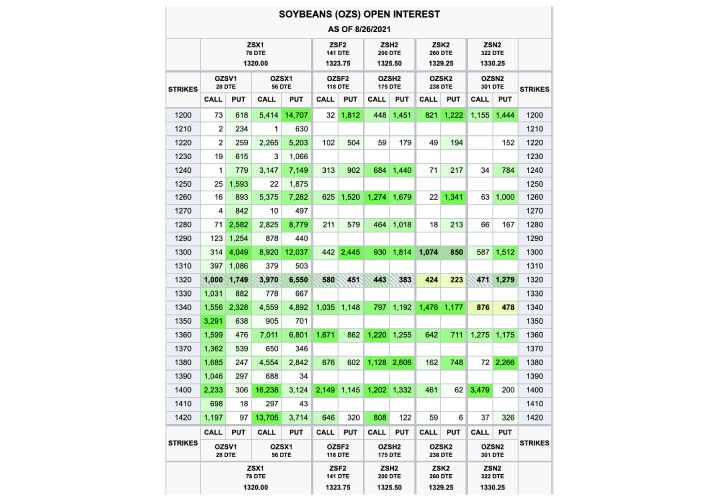
November Soybean options have ~60 days until expiration and are trading around a 19% volatility. The Grain & Oilseed market have a USDA WASDE on September 10, which will disclose more information around yield conditions. The Week 2 Soybean Weekly option expire on the same day as the September report. Market participants have utilized short term options at a record pace in 2021 with volumes up 114% for Soybean weeklies averaging 1.8K contracts a day.
Source: QuikStrike Open Interest Heatmap
Subscribe to Options Observer
To receive notifications about Options Observer, select "Options Updates" under the subscription center.
More like this
Options Observer: WTI Weekly Options Are Trending
Options Observer - The Rise of Nasdaq-100 Options on Futures
Options Observer – Eurodollar Mid-Curve options spring to life
Learn more about Grains and Oilseeds
Learn how traders manage risk, facilitate price discovery, and capture market opportunities with CME Group’s benchmark grain and oilseed futures and options.