Using Eris SOFR Swap Futures to Manage Interest Rate Exposure
Commercial borrowers can use Eris SOFR Swap futures to lock-in their interest due for a variable rate loan, effectively creating a position that mimics a fixed rate loan in terms of knowing how much interest they’ll pay. Since interest rate changes can have an impact on the profitability of a project, Eris SOFR futures can be a cost effective way to decrease the risk of rising rates or serve as an alternative to opting for a higher-priced fixed-rate loan.
When interest rates such as the Secured Overnight Financing Rate (SOFR) rapidly rise – like the 5% rise in rates seen in 2021-2022 – it can become more challenging for commercial borrowers looking to borrow money from a bank or private lender, since loans tied to a floating rate mean the borrower bears the risk of rate increases during the loan’s term.
Eris SOFR Swap futures replicate the financial performance of overnight SOFR interest rate swaps, but require less documentation, less collateral and lower costs than swaps typically do. They are futures products listed at CME Group, a U.S. futures exchange regulated by the Commodity Futures Trading Commission.
Example
Consider a real estate developer seeking to borrow $10 million from a bank for five years to finance construction of new homes.
The bank offers the developer two choices: A variable rate loan tied to the 30-day Term SOFR rate, plus a spread of 100 basis points; or a fixed rate loan set at the five-year SOFR swap rate plus a spread of 160 basis points. Both loan options require monthly payments of interest only and repayment of principal at the conclusion of the five-year loan.
Rather than paying the higher spread of the fixed rate loan, the developer instead chooses the variable rate loan and decides to use Eris SOFR futures to hedge his interest rate risk.
Here’s how the developer might approach the situation :
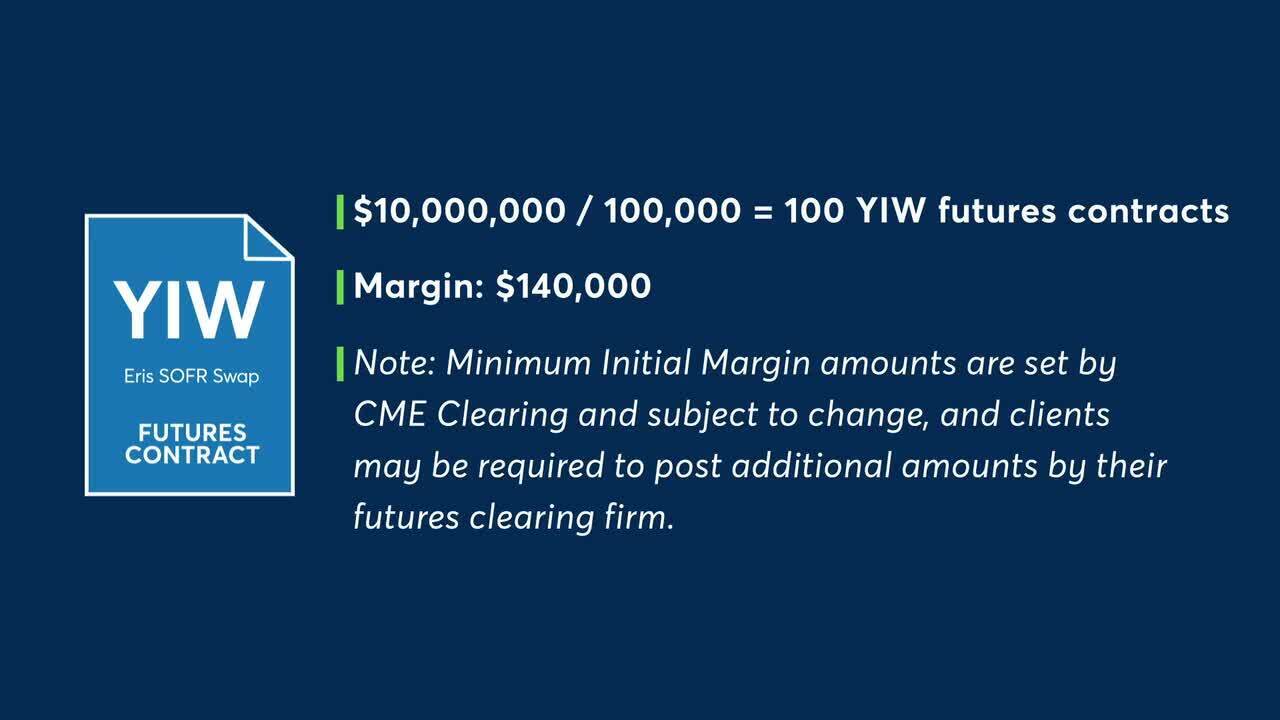
- On the day the loan funds, the developer sells 100 contracts of five-year Eris SOFR Swap futures, equivalent to $10 million notional value, as a financial hedge.
- To secure the position, the Developer posts approximately 1.4% of notional value (in this case $140,000) to their bank or futures broker. This is called Initial Margin or Performance Bond and the developer will receive a portion of it back each quarter as time elapses. (Note: Minimum Initial Margin amounts are set by CME Clearing and subject to change, and clients may be required to post additional amounts by their futures clearing firm).
- Daily Futures Payment/Collection: Each trading day, the futures position will be “marked to market” by CME Group, resulting in a payment or collection of Variation Margin. For days when rates rise, the developer will receive Variation Margin from their bank or futures broker. When rates fall, the developer will pay Variation Margin.
- Loan Payments: Meanwhile, the developer will make interest payments to the bank to pay down the loan in amounts that are higher if Term SOFR rises and lower if Term SOFR falls.
- Hedged Net Position: Over time, the variable rate loan and the Eris SOFR financial hedge offset each other. If rates rise, the developer can use money received from the Eris SOFR hedge to pay the increased interest payments due on the loan. And if rates fall, the developer can use the money saved from lower interest payments to fund Variation Margin due on the futures hedge.
- Closing Out: After five years in our example, the loan matures, the futures position terminates and the developer receives back their remaining portion of Initial Margin. If the developer refinances or pays off the loan early, they can remove the hedge by “buying back” 100 contracts to close the position and receive back their Initial Margin.
Summary
Commercial borrowers can use Eris SOFR futures to hedge interest rates and lock-in interest due in advance for a variable rate loan by:
- Executing an Eris SOFR Swap futures trade when the loan funds
- Posting Initial Margin as collateral to secure the position, receiving it back over time
- Paying and collecting Variation Margin daily, offsetting savings or losses on monthly loan payments
For more information, visit erisfutures.com or cmegroup.com/eris.