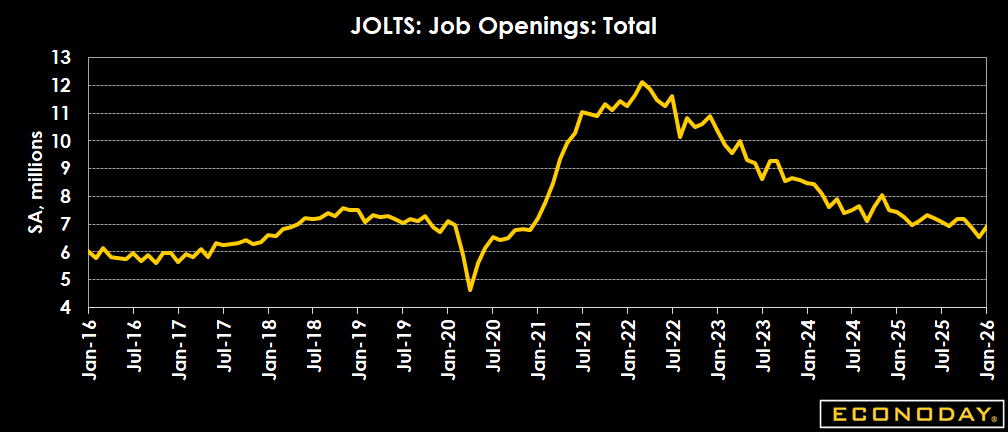
| Consensus | Consensus Range | Actual | Previous | Revised | |
| Job Openings | 6.750M | 6.675M to 6.800M | 6.946M | 6.542M | 6.550M |
Highlights
Job openings increased to 6.946 million in January from 6.550 million in December, slightly higher than the consensus of 6.750 million in an Econoday survey of forecasters.
Private sector job openings were up 370,000 to 6.198 million. Retail trade was up 130,000, finance and insurance up 184,000, and health care and social assistance up 150,000.
Government job openings increased 26,000 in January as state and local openings rose 25,000.
Hiring was up 22,000 to 5.294 million in January, with private payrolls up 15,000 and government up 7,000. The largest gains were in professional and business services (35,000), accommodation and food services (27,000), and construction (23,000). Hiring in wholesale and retail trade was up 16,000 and 17,000, respectively. The largest decline was in transportation, warehousing, and utilities, down 67,000. Finance and insurance hiring declined 23,000, and real estate and rental and leasing was down 20,000.
Total job separations were down 98,000 to 5.105 million, led by a 91,000 drop in the private sector. Transportation, warehousing, and utilities was down 79,000, retail trade down 54,000, and health care and social assistance down 51,000. The largest increases were in professional and business services, where separations were up 53,000, and accommodation and food services, with a 25,000 increase.
Total quits a subset of separations dropped 88,000 in January to 3.137 million. Quits in private industries fell 90,000, while they edged up 2,000 in government. The largest decline was in retail trade, down 69,000.
Layoffs and discharges another subset of separations were down 35,000 to 1.631 million in January, including a 40,000 decline in the private sector. The largest declines were in transportation, warehousing, and utilities, down 55,000 and in professional and business services, down 35,000.
Market Consensus Before Announcement
The consensus sees job openings back up at 6.750 million in the delayed January report after a surprise drop to 6.542 million in December.
Definition
The Labor Department's JOLTS report tracks monthly change in job openings and offers rates on hiring and quits. The reporting period lags other employment data including the employment situation report. The word JOLTS stands for Job Openings and Labor Turnover Survey.
Description
Although lagging the release timing of the employment situation report by a month, JOLTS provides additional information on the labor market. The payroll survey in the employment situation report provides numbers on net job changes. JOLTS breaks down labor market data into pre-net changes such as job openings, hires, and separations.