| Consensus | Consensus Range | Actual | Previous | Revised | |
| Initial Claims - Level | 213K | 205K to 215K | 215K | 209K | 210K |
| Initial Claims - Change | 5K | -3K | -2K | ||
| 4-Week Moving Average | 209K | 202.5K | 202.750K |
Highlights
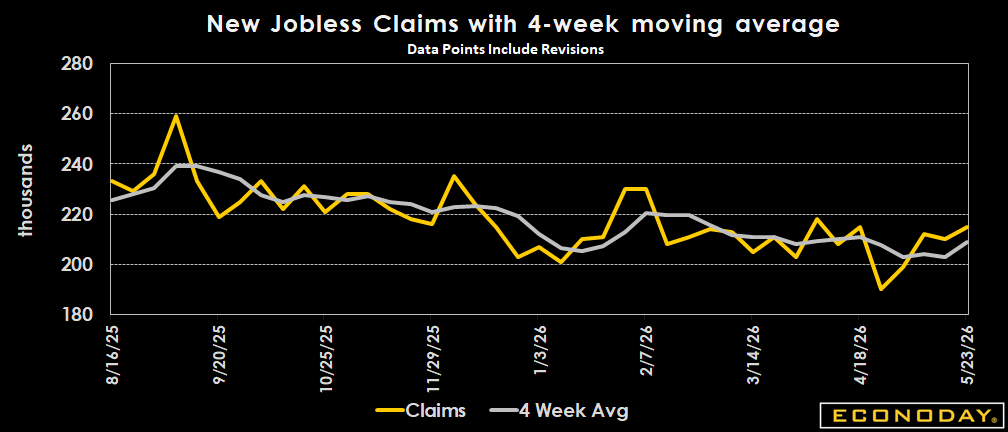
Claims rise 5K to 215K versus the expected 213K, so very close to the forecast, and showing a surprisingly resilient job market given turmoil with energy prices and other supply chain disruptions. The 4-week moving average is 209K, up from 202.75K in the previous week. These numbers seem very steady just above 200K, which underscores the view expressed by Federal Reserve officials lately that the employment market has stabilized.
Market Consensus Before Announcement
Claims expected at 213K versus 209K, steady in their recent range, consistent with a surprisingly stable job market.
Definition
New unemployment claims are compiled weekly to show the number of individuals who filed for unemployment insurance for the first time. An increasing (decreasing) trend suggests a deteriorating (improving) labor market. The four-week moving average of new claims smooths out weekly volatility.
Description
Jobless claims are an easy way to gauge the strength of the job market. The fewer people filing for unemployment benefits, the more have jobs, and that tells investors a great deal about the economy. Nearly every job comes with an income that gives a household spending power. Spending greases the wheels of the economy and keeps it growing, so a stronger job market generates a healthier economy.
There's a downside to it, though. Unemployment claims, and therefore the number of job seekers, can fall to such a low level that businesses have a tough time finding new workers. They might have to pay overtime wages to current staff, use higher wages to lure people from other jobs, and in general spend more on labor costs because of a shortage of workers. This leads to wage inflation, which is bad news for the stock and bond markets. Federal Reserve officials are always on the look-out for inflationary pressures.
By tracking the number of jobless claims, investors can gain a sense of how tight, or how loose, the job market is. If wage inflation looks threatening, it's a good bet that interest rates will rise, bond and stock prices will fall, and the only investors in a good mood will be the ones who tracked jobless claims and adjusted their portfolios to anticipate these events.
Just remember, the lower the number of unemployment claims, the stronger the job market, and vice versa.