| US Soybean Crush (Million Bushels) | |||||
| Monthly Total | |||||
| Date | Current | Last Year | Average | Max / Year | Min / Year |
| Sep-24 | 186.50 | 174.76 | 168.26 | 186.50 / 2024 | 134.56 / 2015 |
| Oct-24 | 215.78 | 201.39 | 193.72 | 215.78 / 2024 | 170.13 / 2015 |
| Nov-24 | 210.04 | 200.09 | 187.34 | 210.04 / 2024 | 165.78 / 2015 |
| Dec-24 | 217.70 | 204.29 | 191.93 | 217.70 / 2024 | 167.04 / 2015 |
| Jan-25 | 212.55 | 194.28 | 191.35 | 212.55 / 2025 | 160.47 / 2016 |
| Feb-25 | - | 193.44 | 169.78 | 193.44 / 2024 | 151.41 / 2017 |
| Mar-25 | - | 203.54 | 188.81 | 203.54 / 2024 | 160.77 / 2017 |
| Apr-25 | - | 177.57 | 177.39 | 186.99 / 2023 | 150.32 / 2017 |
| May-25 | - | 191.63 | 176.86 | 191.63 / 2024 | 156.08 / 2015 |
| Jun-25 | - | 183.49 | 169.14 | 183.49 / 2024 | 148.23 / 2017 |
| Jul-25 | - | 193.27 | 179.23 | 193.27 / 2024 | 153.45 / 2016 |
| Aug-25 | - | 167.55 | 172.36 | 177.53 / 2019 | 140.63 / 2016 |
| Daily Crush Pace (Mbu / Day) | |||||
| Date | Current | Last Year | Average | Max / Year | Min / Year |
| Sep-24 | 6.22 | 5.83 | 5.61 | 6.217 / 2024 | 4.485 / 2015 |
| Oct-24 | 6.96 | 6.50 | 6.25 | 6.961 / 2024 | 5.488 / 2015 |
| Nov-24 | 7.00 | 6.67 | 6.24 | 7.001 / 2024 | 5.526 / 2015 |
| Dec-24 | 7.02 | 6.59 | 6.19 | 7.023 / 2024 | 5.389 / 2015 |
| Jan-25 | 6.86 | 6.27 | 6.17 | 6.857 / 2025 | 5.176 / 2016 |
| Feb-25 | - | 6.67 | 6.03 | 6.670 / 2024 | 5.332 / 2016 |
| Mar-25 | - | 6.57 | 6.09 | 6.566 / 2024 | 5.186 / 2017 |
| Apr-25 | - | 5.92 | 5.91 | 6.233 / 2023 | 5.011 / 2017 |
| May-25 | - | 6.18 | 5.71 | 6.181 / 2024 | 5.035 / 2015 |
| Jun-25 | - | 6.12 | 5.64 | 6.116 / 2024 | 4.941 / 2017 |
| Jul-25 | - | 6.24 | 5.78 | 6.235 / 2024 | 4.950 / 2016 |
| Aug-25 | - | 5.41 | 5.56 | 5.727 / 2019 | 4.536 / 2016 |
| Data begins May 2015 after USDA NASS started publication. Average, Max and Min calculations look at USDA NASS data only. ** = New All-Time High / * = New High for that month of the year | ^^ = New All-Time Low / ^ = New Low for that month of the year. | |||||
| US Soybean Oil Stocks (Billons of Pounds) | |||||||||
| Current Crop Year | History Since 2015 | ||||||||
| Date | Current | Year Ago | Year Ago % Change | As % of USDA Est. | Average | Max | Max Year | Min | Min Year |
| Oct-24 | 1.592 | 1.502 | +6.03% | 0.10% | 1.970 | 2.386 | 2021 | 1.502 | 2023 |
| Nov-24 | 1.618 | 1.599 | +1.19% | 0.11% | 2.003 | 2.406 | 2021 | 1.599 | 2023 |
| Dec-24 | 1.687 | 1.824 | -7.49% | 0.11% | 2.131 | 2.466 | 2021 | 1.687 | 2024 |
| Jan-25 | 2.090 | 2.028 | +3.07% | 0.14% | 2.258 | 2.500 | 2022 | 2.005 | 2019 |
| Feb-25 | - | 2.147 | - | - | 2.365 | 2.566 | 2022 | 2.147 | 2024 |
| Mar-25 | - | 2.369 | - | - | 2.345 | 2.444 | 2018 | 2.233 | 2019 |
| Apr-25 | - | 2.311 | - | - | 2.448 | 2.689 | 2018 | 2.178 | 2021 |
| May-25 | - | 2.188 | - | - | 2.293 | 2.466 | 2016 | 2.019 | 2019 |
| Jun-25 | - | 2.125 | - | - | 2.202 | 2.424 | 2016 | 2.014 | 2019 |
| Jul-25 | - | 2.009 | - | - | 2.170 | 2.384 | 2018 | 2.000 | 2017 |
| Aug-25 | - | 1.629 | - | - | 2.004 | 2.215 | 2018 | 1.629 | 2024 |
| Data begins May 2015 after USDA NASS started publication. | |||||||||
| USDA Fats and Oilseeds - Estimates for January 2025 | ||||
| Estimates | Previous | |||
| Average | Range | Jan 2024 | Y-o-Y | |
| Soybean Crushed (M bu) | 210.9 | 209.0 - 212.0 | 194.8 | +8.2% |
| Oil Stocks (M lbs) | 1,757 | 1,725 - 1,802 | 2,029 | -13.4% |
Highlights
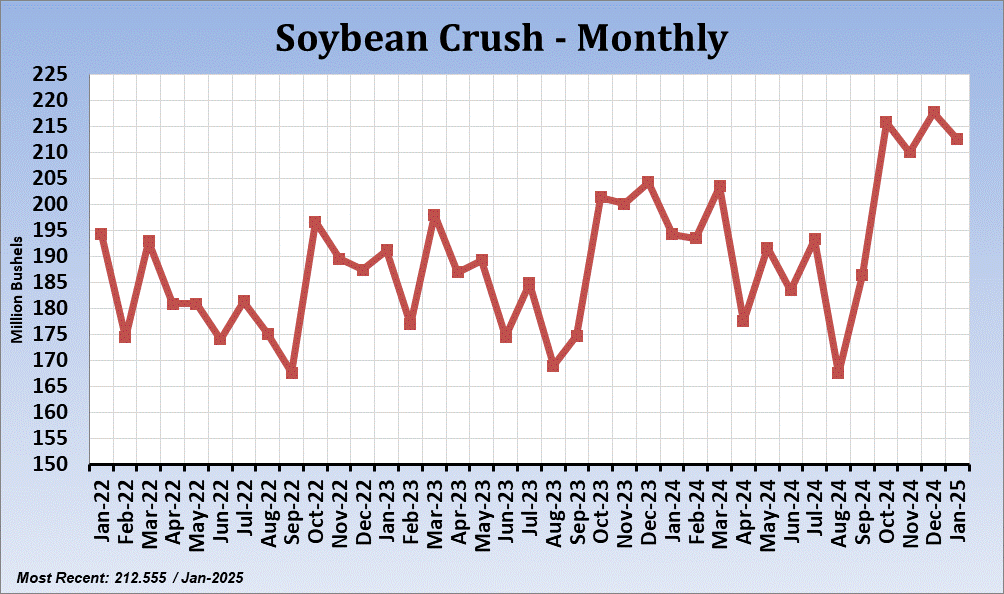
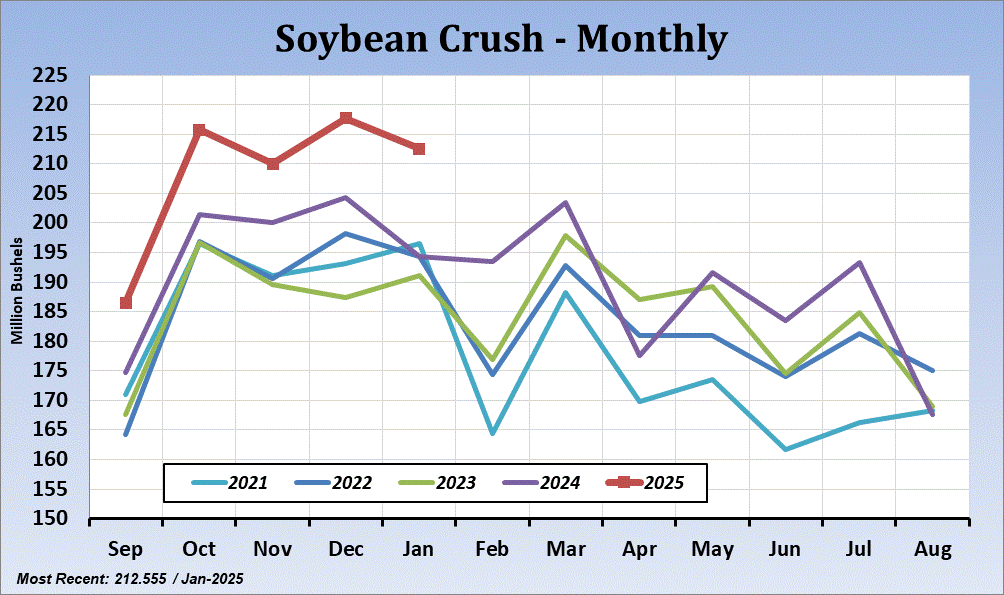
US soybean crush hit a new record high for the month of January at 212.55 million bushels versus the previous record of 196.51 million in 2021. This was above the high-end of pre-report estimates. The January average is 191.35 million bushels. US soybean crush pace hit a new record high for the month of January at 6.86 million bushels versus the previous record of 6.34 million in 2021. The January average crush pace is 6.17 million bushels per day.
The cumulative crush for the marketing year has reached 1.04 million bushels 43.3% of the USDA's current estimate for the marketing year. As of January last year, the cumulative crush had reached 42.6% of the USDA forecast of 974.81 million bushels.
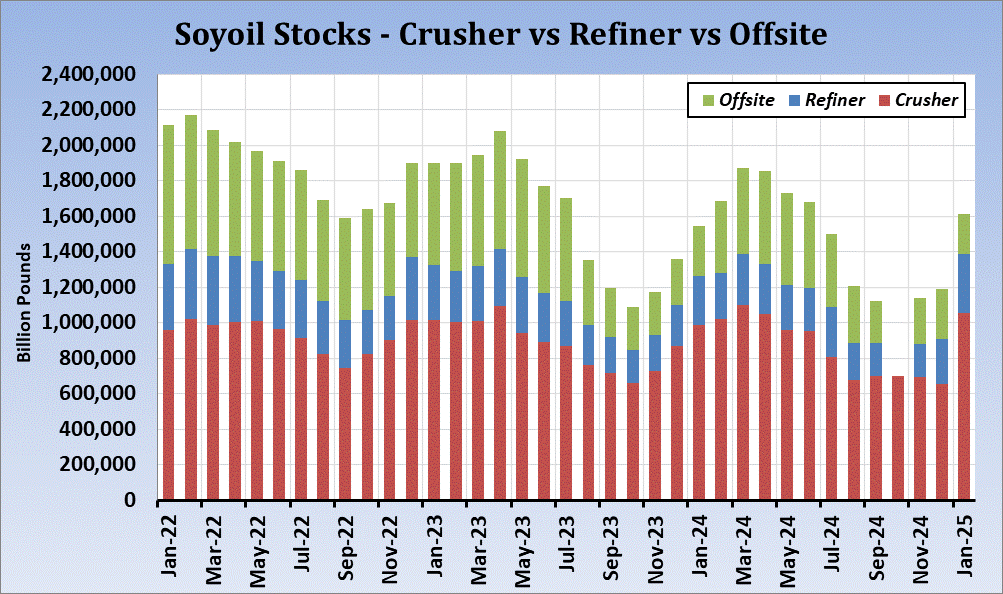
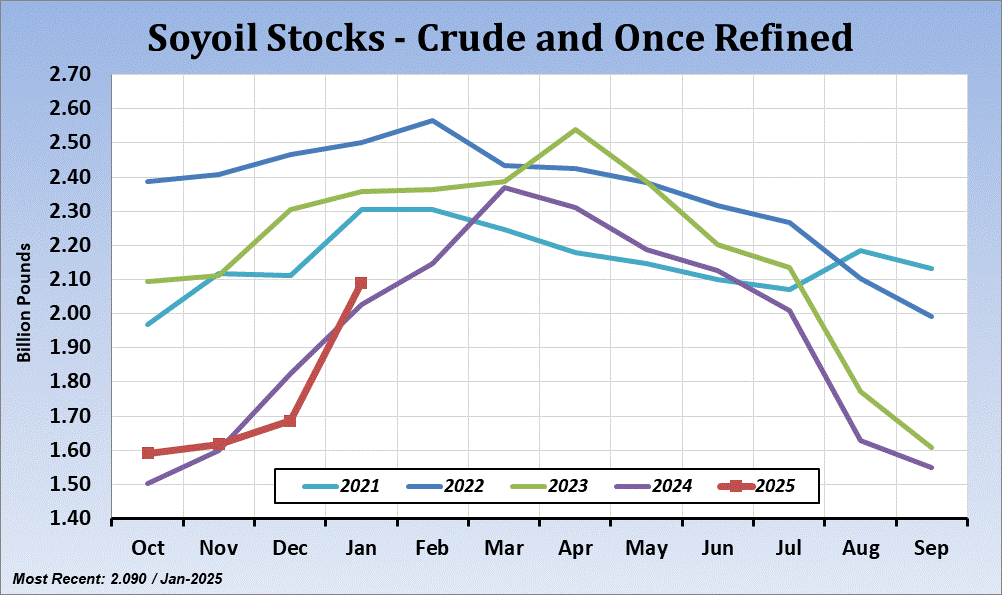
US soybean oil stocks in January came in at 2.090 billion pounds versus 1.687 last month and 2.028 last year. The average stock level for this time of year is 2.258 billion pounds. The largest stock level for this month was 2.356 (2023) and lowest was 2.028 (2024). Current stock levels are running at 0.14% of USDA ending stocks estimates for the year.
Definition
This monthly release is part of the Current Agricultural Industrial Report (CAIR) program, and covers the crush of oilseeds and production of crude oil for selected states and the U.S. as well as U.S. production and consumption of selected fats and oils for edible and inedible uses. The end-of-month stock values by oilseed are also published. The report is compiled from data from facilities regarding oilseed crushing, crude oil production, once refined oil production, rendering production, and end of month stocks for the previous calendar month.
Description
This report offers processing data for oilseeds, including soybeans. It also offers supply data for soybean oil.
The soybean crush data measures the amount of soybeans that are processed (crushed) during a given month. Crush is the primary demand component for soybeans. Analysts like to track the monthly crush data as the marketing year progresses and compare it with previous years and with the pace needed to reach the USDA’s forecast. If the crush is running behind pace, trader may expect the USDA to lower their forecast in future Supply/Demand (WASDE) reports.
The soybean oil stocks data measures the amount in storage at the end of the month. If stocks are unusually high, analysts may become concerned about oversupply, and they may also become concerned that demand is not as strong as expected. Likewise, if oil stocks are lower than expected, analysts may be alerted to stronger than expected demand. In recent years there have been times when the soybean crush was running at a record pace and soybean oil stocks were declining. This was because soybean oil exports were strong. Biodiesel is another component for soybean oil demand.