Single Stock Futures Product Overview
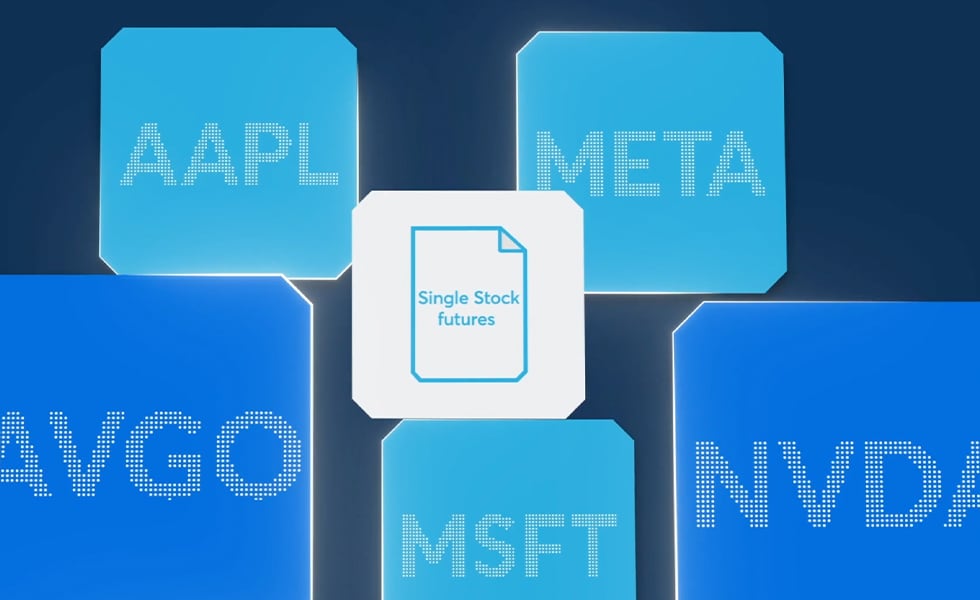
What are Single Stock Futures?
Single Stock futures (SSF) are contracts derived from specific stocks. While trading stocks, ETFs or cryptocurrency involves buying and selling the assets directly, a futures contract is a legally binding agreement to buy or sell a standardized asset on a specific date or during a specific month in the future.
- Contract size: Each Single Stock futures contract represents 100 shares of the underlying stock.
- Tick size: The minimum price movement (tick) is 0.01 points, which equals a value of $1.00 per tick.
- Trading venue: These contracts trade on a transparent central limit order book (CLOB) with the deep liquidity of CME Group markets.
Key benefits of Single Stock futures
1. Capital efficiency
In traditional stock trading, you might pay the full value of the shares (e.g., $72,500 for 100 shares of a $725 stock). In the futures market, you only post a performance bond, or margin, which is a fraction of the total value.
Note: While this structure can amplify potential gains, it also amplifies potential losses. Risk management is critical.
2. Ease of going short
- Stocks: Shorting may require borrowing shares from a broker if a trader doesn't already own the stock.
- Single Stock Futures: A market participant can go short simply by selling a contract, making it a more streamlined tool for hedging or expressing a bearish view.
3. Extended trading hours
Unlike traditional stock market hours, Single Stock futures offer nearly 24-hour access (23 hours a day, 5 days a week), allowing for flexible position management in response to overnight market news.
4. Financial settlement
Unlike stocks, which can be held indefinitely, futures have an expiration date. Single Stock futures are listed on a quarterly cycle (March, June, September, December) and are financially settled.
- Settlement process: At expiration, profit or loss is settled in cash rather than the physical delivery of shares.
- Price alignment: The final settlement price is determined by the official closing price of the stock on its primary exchange.
Frequently asked questions
How many shares does one Single Stock futures contract represent?
- Each contract represents 100 shares of the underlying stock.
How does capital efficiency work in Single Stock futures?
- Capital efficiency allows a trader to control a large notional value of stock with a smaller amount of initial capital (margin).
Are Single Stock futures settled in shares or cash?
- They are financially settled in cash. At expiration, the profit or loss is calculated based on the stock's official closing price, and cash is deposited or withdrawn accordingly.
- When do Single Stock futures expire?
- These contracts follow a quarterly expiration cycle, typically occurring in March, June, September, and December.