A Look into the Refining Process
What are refined products?
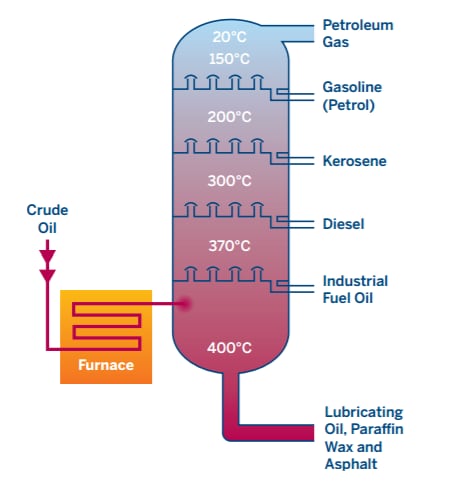
Refined petroleum products are fuels distilled from crude oil and other liquids (lease condensates, liquefied gasses). After crude oil is removed from the ground, it's sent to a refinery where different parts of the crude oil are separated into usable petroleum products.
https://www.cmegroup.com/content/dam/cmegroup/education/lessons/images/a-look-into-the-refining-process-01.png
Source: CME Group
What are some examples of refined products?
Some examples of petroleum products include gasoline, distillates such as diesel fuel, heating oil and jet fuel, fuel oil, petrochemical feedstocks, waxes, lubricating oils and asphalt.
Most refineries focus on producing transportation fuels, the largest use category for petroleum products. Approximately 45% of all refinery output in the U.S. was gasoline and distillate fuels (mostly ULSD or Ultra-Low Sulfur Diesel), which represent the second-largest category at close to 40%. Other uses of petroleum products include heating, paving roads, generating electricity and as feedstocks for petrochemical and plastics production.
How does a simple refinery operate?
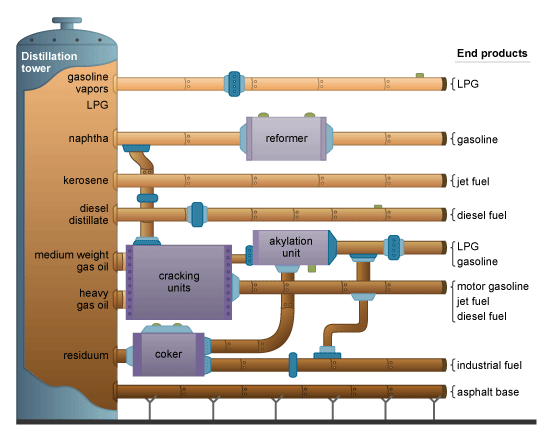
All refineries have three basic steps: separation, conversion and treatment. During the separation process, the liquids and vapors separate into petroleum components called fractions based on their weight and boiling point in distillation units. Heavy fractions such as asphalt and residual fuel oil separate lower down in the distillation unit while the lighter fractions such as gasoline and naphtha rise to the top.
Following distillation, heavier fuels can be processed further through cracking, alkylation and reforming to obtain higher-value products. The final step in the refining process is to bring products up to pipeline and market standards through blending and treating. For instance, refineries and blenders combine gasoline blending components and ethanol to obtain finished retail gasoline.
Trading refined products
The NYMEX RBOB Gasoline futures and NY Harbor ULSD futures contracts represent the world’s largest and most liquid refined products futures.
The RBOB Gasoline futures typically trade between 150,000 to 200,000 contracts per day. The RBOB futures contract is the global benchmark for gasoline traded around the world. Refiners both in the United States and internationally follow the RBOB futures prices and both commercial and non-commercial market participants hedge their exposure to gasoline price fluctuations through the trading of the RBOB Gasoline futures contract.
The NYMEX NY Harbor ULSD futures contract typically trades an average of 125,000 to 175,000 contracts per day. It's the distillate fuel benchmark, through which traders manage their price risk in ULSD and associated distillate products such as jet fuel, heating oil and gas oil.
Hedging risk using Refined products, futures and options
The primary risk that traders seek to hedge is price risk, which is the difference between the spot or physical market price of a commodity today and its future price.
Companies that are significantly exposed to the price of a particular commodity may choose to manage risk through engaging in the buying or selling of a futures contract. The benefits of using exchange-traded futures and options contracts include:
- The terms and conditions for futures contracts are pre-defined and standardized so there is no uncertainty about the underlying product.
- Exchange-listed derivatives price and trade on a transparent platform that is available to all market participants.
- Transactions on the Exchange have deep liquidity, with many buyers and sellers participating in the market at competitive prices.
- Trading derivatives carries market risk, but exchange-listed contracts limit counter-party credit risk by centralizing clearing functions.
Who trades Refined products futures?
Called commercial participants or hedgers, airlines, retail fuel distributors (such as gas stations) and refiners are examples of companies that engage in various types of hedging as part of cost control and risk mitigation. Non-commercial participants include banks, money managers and funds. These traders generally don't possess significant physical assets in the underlying markets but seek to gain exposure to price volatility as part of a broader trading strategy.
Refiners in particular are most concerned about hedging the difference between their input costs and output prices. Refiners’ profits are tied directly to the spread or difference between the price of crude oil and the prices of refined products — gasoline and distillates (diesel and jet fuel). This spread is called a “crack spread.”